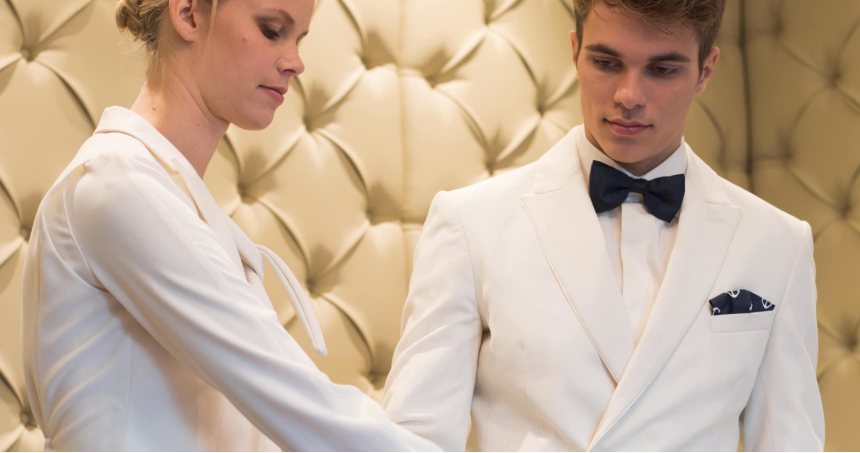
The waiter represents the dynamic heart of dining room service. At Maurel, the uniform is not conceived as a simple work garment, but as an image project capable of blending the prestige of Made in Italy with absolute technical precision. Each garment is designed to enhance the identity of the establishment, offering the staff a work tool that is as elegant as it is high-performing.
Operational fluidity and ergonomic freedom
Technical excellence and visual impeccability
Unlike static representative figures, the waiter is in constant motion.
For this reason, the simple concept of comfort is surpassed by the need to guarantee authentic operational fluidity.
The tailoring accommodates the real physical needs of the service: the continuous stretching of the arms for table service, the torso twists necessary in narrow passages, and the maintenance of a prolonged upright posture while handling trays, plates, and bottles.
Harmony and subtle hierarchies
Today, luxury establishments seek harmonious and cohesive teams, abandoning old, marked contrasts. The hierarchy in the dining room is built through intelligent micro-differences. For example:
- The Runner figure dresses in a more essential, lightweight, and operational manner.
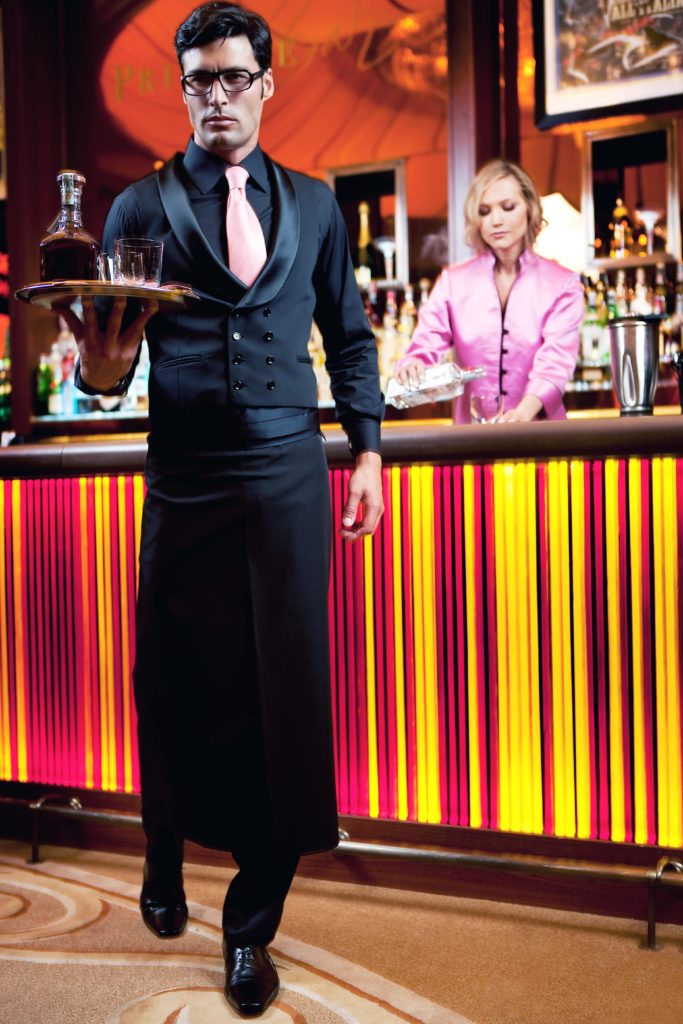
- The Chef de Rang adopts a more structured, visible, and authoritative image.
These elegant distinctions are achieved by playing on a color detail, a specific accessory, or a different garment structure, such as the targeted choice between a vest and a jacket.
In a luxury context, staff recognizability is an absolute priority and must be guaranteed through a discreet and never intrusive elegance. To ensure excellent operational durability and a consistently polished image, our garments feature the highest level of technical specifications:
- Aesthetic and wash stability: the uniforms remain tidy even after many hours of service. They maintain unaltered color, shape, and crease even after numerous washing cycles. For this reason, we favor non-natural technical fabrics over 100% natural materials, avoiding white shades to prevent transparency issues.
- Shirt retention: we design tailoring solutions, such as elongated cuts, so that the shirt never untucks from the trousers during movements.We exclude the use of "bodysuit" garments, as they would require excessive and uncomfortable care in daily use.
- Pocket management: often, pockets are inserted internally so as not to compromise aesthetics. In many projects, we advise omitting them entirely to prevent them from overfilling, which could ruin the silhouette or visually weigh it down, optionally pairing small pouches to elevate the look and respond to operational needs.
Frequently asked questions
Is a vest or a mandarin collar jacket better for dining room waiters? There is no absolute answer, as homogenization is to be avoided in the luxury sector. The choice does not depend on which garment is absolutely "more elegant," but on which item best communicates the identity, architecture, and mood of the venue it belongs to.
How to prevent shirts from coming untucked during service? At Maurel, we opt for targeted technical solutions, such as using elongated cuts for the shirt. We never propose bodysuit shirts, as they require too much care and attention in daily use by the staff.
No-iron fabrics for large teams: advantages and costs? Using materials that keep the uniform stable over time is our absolute priority. For this reason, we almost never use natural fabrics, preferring technical solutions that guarantee high durability and optimize laundry processes.
What should the perfect waiter uniform look like? In the luxury sector, there are no predefined standards. The perfect uniform is always a custom-tailored project based on the establishment's identity, combining impeccable visual cleanliness with support for the operator's specific movements.
Why do waiters keep one arm behind their back? It is a custom historically linked to the etiquette of formal service to show respect and posture, but honestly, it is a practice rarely used in contemporary services.
What is the napkin used by waiters called? This essential service tool is commonly called a "service cloth" or "torchon".
Contact us for
information
If you would like to get to know us better or learn more about our collections, please fill in the form with your details and your request: a member of our staff will contact you as soon as possible.