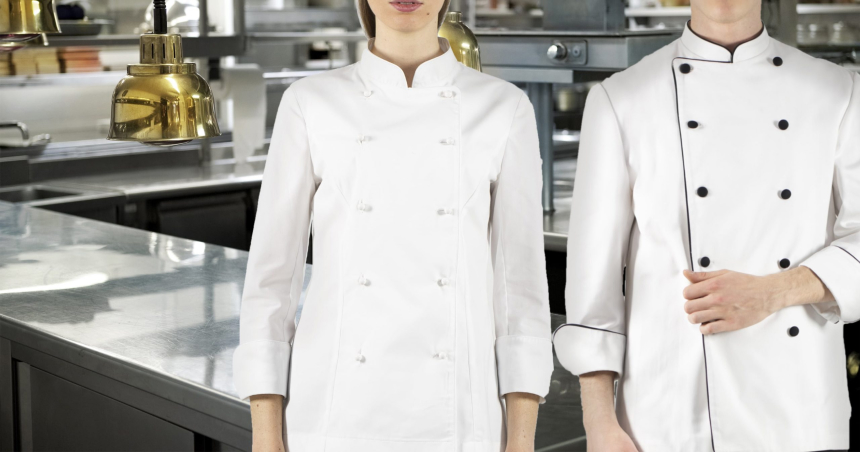
In the world of luxury hôtellerie and fine dining, the chef’s uniform transcends the concept of a simple workwear garment to become a true instrument of “technical performance”.
Uniform characteristics
Technical specifications
For Maurel, "made-to-measure" does not mean traditional tailoring, but rather a profoundly personalized design process rooted in the identity of the establishment and the operator's role, developed as a true fashion collection.
In this context, the chef's jacket takes on a dual role: on one hand, it unequivocally communicates the "rank within the brigade" (from Executive Chef to Commis), on the other, it must guarantee the highest standards of comfort and protection for those working in a demanding environment.
Furthermore, hygiene is elevated to a true "visual sanitary standard”. The use of white, or very light colors, is not merely an aesthetic choice, but the tangible demonstration of operational impeccability that reassures the guest and instills pride in the team.
The selection of materials and design is always driven by the project and the requirements for durability, long-term stability, and ease of maintenance demanded by our clients.
Active Protection and Safety: The jacket is conceived as an essential tool for protection against heat and boiling liquids. The traditional double-breasted cut provides fundamental additional chest protection.
Emergency Release: The strategic use of removable stud buttons ensures the quick and immediate release of the jacket in critical situations, such as contact with boiling oil or the onset of a fire.
Optimal Thermoregulation: To manage the high temperatures of the kitchen environment, we integrate design concepts such as the "Cool Vent". The addition of breathable mesh inserts under the arms and on the back ensures continuous body ventilation.
Material Selection: We offer solutions ranging from tradition to innovation, comparing the natural crispness of Egyptian cotton with the extraordinary lightness and practicality (non-iron) of technical microfiber.
Frequently asked questions
Chef Jacket: Egyptian cotton or technical microfiber? The choice depends on the operational dynamics of the establishment: Egyptian cotton represents the highest expression of tradition with its crisp, natural feel, while technical microfiber offers innovation through its lightness and non-iron properties that significantly reduce maintenance times.
Why is the chef's jacket traditionally double-breasted? This specific fastening serves an essential dual function: it offers an excellent level of thermal protection on the chest and ensures the garment is reversible. In this way, the chef can conceal any stains by reversing the buttoning, always presenting a perfectly neat appearance during service.
Removable studs or snap buttons: which is the best choice for safety? The primary focus in the kitchen is safety. The analysis centers on the speed of removing the jacket in emergency situations: classic removable buttons (studs) allow the wearer to break free from the garment in a fraction of a second in case of contact with scorching liquids.
What to know about HACCP regulations for kitchen wear? Our uniforms strictly comply with the legal requirements necessary to operate safely. From the selection of fabrics and headwear to the guidelines for suitable footwear, every garment is designed to support hygiene and current food safety regulations.
Why do chefs almost always wear white? Historically, the color white was chosen as a universal symbol of cleanliness; furthermore, technically, it acts as an excellent heat reflector, helping the chef maintain an adequate body temperature.
What does the height of the chef's hat (Toque) signify? According to centuries-old legend and culinary tradition, the height of the Toque is directly proportional to the rank, authority, and accumulated experience of the chef wearing it.
What is the purpose of the pocket positioned on the sleeve? This is a detail of extremely high practical utility: it is specifically designed to allow the chef to always have a thermometer, a pen, or plating tweezers close at hand.
Contact us for
information
If you would like to get to know us better or learn more about our collections, please fill in the form with your details and your request: a member of our staff will contact you as soon as possible.